

Are you wondering whether Rust puts more strain on your CPU or GPU? Knowing this can help you optimize your system and get the best performance.
Whether you’re a gamer, developer, or tech enthusiast, understanding how Rust uses your hardware is key to avoiding lag and overheating. Keep reading to uncover the truth about Rust’s demands on your CPU and GPU, and discover tips to keep your setup running smoothly.
This insight might just change the way you play or work with Rust forever.
Credit: www.gtxgaming.co.uk
Rust Performance Basics
Rust is known for its speed and safety. It runs very fast while keeping bugs away. This makes it a popular choice for many projects. Understanding how Rust performs helps decide if it is CPU or GPU heavy.
Rust uses a unique design to balance power and control. It works closely with the hardware to get the best speed. Let’s look at the main parts of Rust’s performance.
Rust Language Architecture
Rust has a strong focus on low-level control. It lets programmers manage memory without a garbage collector. This reduces delays and speeds up programs.
The language uses a system called ownership. This system prevents data errors during runtime. It also helps programs run smoothly and quickly.
Rust’s architecture supports safe concurrency. Multiple tasks run at the same time without conflicts. This improves performance on multi-core CPUs.
Compilation And Optimization
Rust compiles code into fast machine language. The compiler checks for errors and removes unused code. This makes the final program smaller and faster.
The compiler applies many optimizations. It improves CPU usage by minimizing unnecessary instructions. It also arranges data for quicker access.
Rust’s compilation process allows fine tuning. Developers can choose optimization levels to fit their needs. This flexibility helps balance speed and resource use.
Cpu Vs Gpu Workloads
Understanding the difference between CPU and GPU workloads helps to know which tasks each handles best. Both are important parts of a computer but serve different roles. This knowledge clarifies whether Rust programming is heavy on CPU or GPU.
CPUs manage general tasks and complex processes. GPUs handle many simple tasks at the same time. These roles affect how Rust code runs and what kind of hardware it uses most.
Characteristics Of Cpu Tasks
CPUs are designed for tasks that need strong logic and decision-making. They work well with complex instructions and varied operations. CPUs handle tasks one at a time or in small groups.
They are great for running operating systems, software, and programs like Rust. CPUs focus on accuracy and control over speed in many cases. They also manage input/output and system management tasks.
Characteristics Of Gpu Tasks
GPUs excel at running many simple tasks at once. They are built to handle parallel processing. This means they can work on hundreds or thousands of small jobs simultaneously.
GPUs are mostly used for graphics and video rendering. They also help in machine learning and scientific simulations. Their design favors speed over complex logic or control.
Rust And Cpu Utilization
Rust is known for its fast and efficient code. It uses the CPU well to run programs smoothly. The way Rust handles CPU tasks affects how heavy it feels on the system.
Understanding how Rust uses the CPU helps to know if it is CPU-heavy or not. Rust can work in different ways with the CPU to get the best performance.
Single-threaded Performance
Rust runs single-threaded code very fast. It produces code that the CPU can execute quickly. This means one core of the CPU does most of the work efficiently.
Rust’s design helps avoid extra CPU work. It does not waste time on slow tasks. This improves speed and lowers CPU load.
Multithreading And Concurrency
Rust supports multithreading to use many CPU cores at once. This spreads the work across the CPU for better speed. Rust’s safety features prevent common threading errors.
Concurrency in Rust means running many tasks at the same time. This keeps the CPU busy without overloading it. Rust’s tools make concurrency easier and safer.

Credit: softwareg.com.au
Rust And Gpu Integration
Rust is gaining attention for its ability to work with GPUs. This makes it useful for programs needing fast computing power. Rust’s design helps it run code safely and efficiently on graphics cards.
Using Rust with GPUs allows developers to write parts of programs that run on the GPU. This can speed up tasks like image processing, data analysis, and machine learning. Rust offers tools and libraries to support this kind of programming.
Gpu Programming In Rust
Rust lets programmers write code that runs directly on the GPU. This is often done using shader languages or compute kernels. These programs handle parallel tasks, which GPUs do well. Rust’s strong safety checks reduce bugs in GPU code.
Writing GPU code in Rust involves managing memory and threads carefully. Rust’s ownership system helps avoid common mistakes like data races. This makes GPU programming more stable and easier to maintain.
Frameworks And Libraries
Several Rust libraries help connect Rust programs to GPUs. Libraries like wgpu and gfx-rs provide access to GPU features. They support graphics and compute tasks across different platforms.
Other tools allow integration with CUDA or OpenCL for GPU computing. These frameworks simplify running complex algorithms on GPUs. They help Rust developers use GPU power without deep hardware knowledge.
Benchmarking Rust Applications
Benchmarking Rust applications helps understand their performance on different hardware. It shows if Rust code uses more CPU or GPU power. This knowledge guides developers in optimizing their programs.
Rust is known for fast and safe code. But how it performs depends on the task and system setup. Testing real workloads reveals whether Rust is CPU-heavy or GPU-heavy.
Cpu-heavy Scenarios
Rust often runs heavy calculations on the CPU. Tasks like data processing, encryption, and web servers use CPU power. Rust’s design makes these tasks fast and efficient. It handles many threads well without slowing down. This makes Rust good for CPU-bound jobs.
Gpu-heavy Scenarios
Rust can also run GPU-heavy tasks with the right tools. Graphics rendering, machine learning, and simulations use GPU power. Rust supports GPU programming through libraries like wgpu and Vulkan. These let Rust programs use the GPU for parallel work. But GPU use depends on the application’s needs.
Optimizing Rust For Hardware
Optimizing Rust for hardware is key to improving performance. Rust is a systems programming language known for its speed and safety. It can run efficiently on both CPUs and GPUs. Understanding how to optimize Rust code can help balance the load between CPU and GPU.
Optimization reduces resource use and speeds up tasks. It allows Rust programs to handle more complex operations. Developers can focus on CPU or GPU improvements based on the task.
Cpu Optimization Techniques
Rust offers tools to enhance CPU performance. Using efficient algorithms reduces CPU cycles. Code should avoid unnecessary computations and data copying. Rust’s ownership model helps manage memory safely and fast. Inline functions and loop unrolling can speed up execution. Profiling tools identify slow parts of the code. Optimizing these parts leads to better CPU use.
Leveraging Gpu Acceleration
GPUs handle many tasks in parallel. Rust can use GPU acceleration for heavy computations. Libraries like Rust-CUDA and OpenCL bindings allow this. Offloading work to the GPU reduces CPU load. Suitable tasks include graphics, machine learning, and data processing. Writing GPU code requires understanding parallelism and memory access. Properly using GPU can greatly boost Rust program speed.
Real-world Use Cases
Rust is known for its speed and safety in programming. It can use both CPU and GPU power. Understanding its real-world use helps to see where it fits best. Some tasks need more CPU work. Others rely on the GPU for fast processing. Let’s explore how Rust performs in different fields.
Games And Graphics
Rust is popular in game development. Games need fast graphics and smooth gameplay. The GPU handles most graphic tasks. Rust code often runs on the CPU but works well with GPU libraries. This balance helps games run faster and look better. Rust also supports graphics APIs like Vulkan and OpenGL. These let developers use GPU power fully. The result is better visuals with less lag.
Data Processing And Computation
Data processing needs strong CPU power. Rust’s design makes it perfect for heavy computing. It runs complex calculations quickly and safely. Rust programs use CPU threads efficiently. This boosts performance in data-heavy tasks. Some Rust projects also use GPU acceleration for tasks like machine learning. But mostly, Rust relies on the CPU for fast data handling. This makes it a top choice for servers and backend systems.
Credit: softwareg.com.au
Future Of Rust Performance
The future of Rust performance looks promising as the language continues to evolve. Rust aims to deliver fast and efficient code for both CPU and GPU tasks. Developers and users expect better speed and smoother execution in upcoming updates. Innovations in Rust’s design will help it handle heavy workloads more effectively.
Upcoming Features
Rust is adding new features to boost performance. Improvements in async programming will allow better CPU use. Enhanced memory management will reduce delays and crashes. Support for GPU programming is growing, making Rust more versatile. These changes will help Rust run faster and use hardware more smartly.
Hardware Trends
Modern hardware development affects Rust’s performance too. CPUs are gaining more cores, which benefits Rust’s parallel tasks. GPUs are becoming more accessible for general computing. Rust is adapting to leverage these hardware advances. The language will better support systems combining CPU and GPU power.
Frequently Asked Questions
Is Rust More Cpu Or Gpu Intensive?
Rust is primarily CPU intensive. It focuses on system-level programming and efficient CPU usage. Rust does not inherently use the GPU unless combined with specific libraries for GPU tasks.
Can Rust Leverage Gpu For Performance?
Rust can leverage the GPU, but only through external libraries. GPU acceleration in Rust requires frameworks like CUDA or OpenCL. Native Rust code mainly runs on the CPU.
Does Rust Optimize Cpu Usage Effectively?
Yes, Rust optimizes CPU usage efficiently. Its memory safety and zero-cost abstractions reduce CPU overhead. This makes Rust programs fast and responsive on the CPU.
Is Rust Suitable For Gpu-heavy Applications?
Rust is suitable but not ideal for GPU-heavy tasks alone. For intensive GPU computing, specialized languages or frameworks are better. Rust can integrate GPU code with additional libraries.
Conclusion
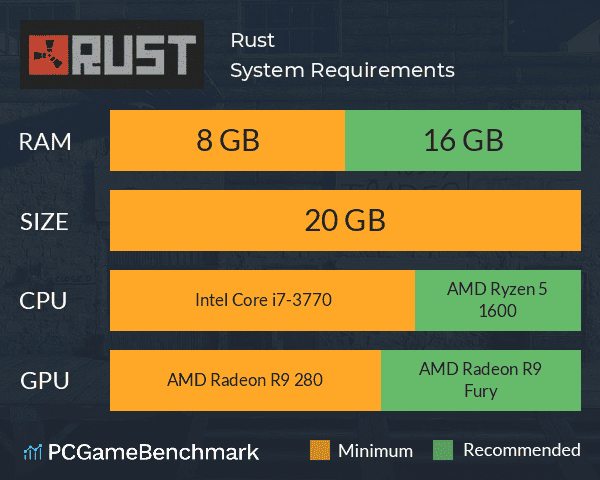
Rust mainly uses the CPU for its processes. The game’s graphics can push your GPU but not heavily. Most tasks rely on your computer’s processor power. This means a strong CPU improves Rust’s performance more. A balanced system with good CPU and GPU works best.
Understanding this helps you optimize your gaming setup. Play smart and enjoy Rust without hardware worries.
