
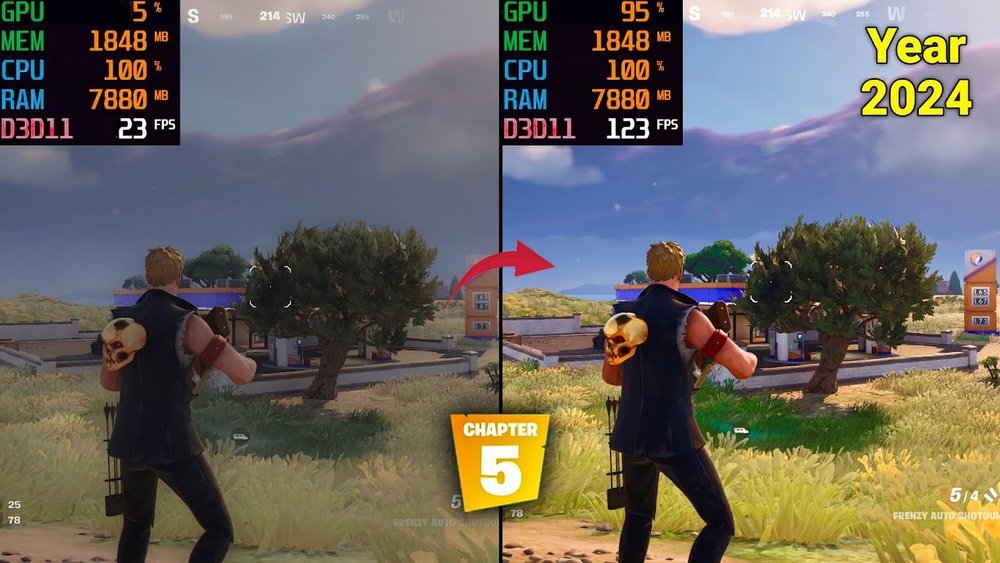
Are you wondering whether Fortnite relies more on your CPU or GPU to run smoothly? If you want to get the best performance and improve your gaming experience, understanding which part of your computer does the heavy lifting is key.
Knowing this can help you decide where to invest your money—whether upgrading your processor or your graphics card will give you the biggest boost. Stick with me, and you’ll discover the answer that could change the way you play Fortnite forever.
Fortnite Performance Basics
Fortnite is a popular game that many players enjoy worldwide. Understanding how it runs on your computer helps improve your gameplay. The game needs both the CPU and GPU to work well. Knowing the basics of Fortnite’s performance can guide you to better settings and smoother play.
Game Engine And Hardware Demands
Fortnite uses the Unreal Engine, which is powerful and complex. This engine requires a good balance of CPU and GPU power. The CPU handles game logic, physics, and player actions. The GPU manages graphics, textures, and visual effects. Both parts must work together for smooth gameplay.
Higher settings need more GPU power for detailed visuals. The CPU must be fast enough to process many players and actions. If either is weak, the game may lag or stutter. Fortnite’s engine pushes both hardware parts hard, especially in big battles.
Key Factors Affecting Gameplay
Frame rate depends on CPU and GPU performance. A slow CPU can cause delays in player movement and shooting. A weak GPU lowers graphic quality and frame rates. Network speed and latency also affect your experience but are separate from hardware.
Settings like resolution, shadows, and textures demand more GPU power. CPU power matters for game physics and building structures quickly. Players with balanced hardware enjoy smoother, more responsive gameplay. Adjusting settings can help if your hardware is older.
Credit: gtek.cv
Role Of The Cpu In Fortnite
The CPU plays a key role in running Fortnite smoothly. It handles many tasks behind the scenes. These tasks keep the game responsive and enjoyable. A strong CPU helps manage game mechanics and player actions.
Without a good CPU, Fortnite may lag or stutter. The CPU works with the GPU to create a balanced gameplay experience. It processes data that the GPU cannot handle alone.
Processing Game Logic And Ai
The CPU processes all game rules and logic in Fortnite. It decides how characters move and react. Enemy AI also runs on the CPU. This means the CPU controls bots and other players’ actions.
Game events like building, shooting, and item pickups depend on the CPU. It ensures these actions happen at the right time. The CPU keeps the game world running smoothly and fairly.
Impact On Frame Rates And Stability
The CPU affects the frame rate in Fortnite. A weak CPU can cause low frame rates and stuttering. This makes the game feel slow and laggy. A strong CPU helps maintain steady and smooth gameplay.
The CPU also helps keep the game stable. It prevents crashes and freezes by managing background tasks. Good CPU performance means fewer disruptions during play.
Role Of The Gpu In Fortnite
The GPU is very important for Fortnite. It helps the game show all the images and effects on the screen. Without a good GPU, the game might look blurry or slow.
The GPU works hard to make the game look nice and run smoothly. It handles the colors, shapes, and movements you see. This lets you enjoy the game without interruptions.
Rendering Graphics And Visual Effects
The GPU creates all the graphics you see in Fortnite. It draws the characters, buildings, and landscapes. The GPU also shows special effects like explosions and shadows.
Good GPUs can show more detailed and realistic images. They help the game look clear and alive. This makes playing Fortnite more fun and exciting.
Influence On Resolution And Detail Settings
The GPU controls the game’s resolution. Higher resolution means sharper and clearer images. A strong GPU allows you to play Fortnite in high resolution without lag.
Detail settings depend on the GPU power too. Better GPUs let you use high detail, showing small objects and textures clearly. This improves your game experience a lot.

Credit: www.youtube.com
Balancing Cpu And Gpu For Best Performance
Fortnite needs both the CPU and GPU to work well together. The CPU handles game logic, physics, and player actions. The GPU renders graphics and visual effects. A good balance between these parts gives smooth gameplay and clear visuals.
Too much power in one part and not enough in the other causes slowdowns. This can make the game lag or reduce frame rates. Matching the right CPU and GPU helps avoid these problems. It also ensures the game runs at its best settings without crashes.
Optimal Hardware Configurations
A mid-range CPU paired with a strong GPU fits most Fortnite players. Processors like Intel i5 or Ryzen 5 work well. They handle game calculations quickly. For the GPU, models like Nvidia GTX 1660 or AMD RX 580 offer great visuals.
This setup supports stable frame rates and good resolution. It also keeps temperatures low to prevent overheating. Gamers can enjoy detailed textures and fast game response with this balance.
Avoiding Bottlenecks
A bottleneck happens when one part limits the other. For example, a weak CPU can slow down a powerful GPU. This reduces the game’s overall speed and smoothness. The opposite is also true.
To avoid bottlenecks, choose parts that complement each other. Check benchmarks for similar setups. Ensure your RAM and storage also match the CPU and GPU speeds. This keeps Fortnite running smoothly without pauses or stutters.
Benchmarking Fortnite On Various Setups
Benchmarking Fortnite on various setups helps to see how the game runs on different computers. It shows which parts of the system affect performance the most. This helps players choose the right hardware for smooth gameplay.
Testing Fortnite on low-end, mid-range, and high-end systems reveals key differences. Each setup handles the game differently. The results show how Fortnite uses the CPU and GPU in real play.
Low-end Systems
Low-end systems have basic CPUs and older GPUs. Fortnite runs at lower settings here. The frame rate may drop during intense fights or large builds. The CPU often limits performance because it handles game logic and player actions. The GPU struggles with graphics, causing stutters. Players may need to lower resolution and details for better play.
Mid-range Builds
Mid-range builds balance CPU and GPU power. Fortnite runs smoothly at medium to high settings. The CPU handles game physics and AI well. The GPU renders graphics without lag. Frame rates stay stable around 60 FPS. This setup suits most players who want good visuals and smooth gameplay. Upgrading one component can improve performance more than upgrading both.
High-end Gaming Rigs
High-end rigs have powerful CPUs and top-tier GPUs. Fortnite runs at max settings with high frame rates. The CPU processes all game tasks quickly, even in crowded scenes. The GPU delivers sharp graphics and fast frame rates above 144 FPS. This setup is ideal for competitive players who need the best performance and visual clarity. It reduces input lag and improves reaction time.
Tips To Boost Fortnite Performance
Boosting Fortnite performance improves gameplay and reduces lag. Small changes can make your game run smoother and look better. Focus on settings, system tweaks, and updates to get the best experience.
In-game Settings Tweaks
Lower the resolution to increase frame rates. Turn off shadows and reduce textures for faster loading. Disable motion blur to see enemies clearly. Set view distance to medium or near to reduce strain on hardware.
System Optimization Tricks
Close background programs to free up memory and CPU power. Use a wired internet connection for stable gameplay. Adjust your computer’s power settings to high performance mode. Clear temporary files regularly to speed up your system.
Driver And Software Updates
Keep your graphics card drivers up to date for best performance. Update your operating system to avoid bugs. Install Fortnite patches promptly to fix issues. Use trusted software tools to maintain your PC health.
Future Trends Affecting Fortnite’s Hardware Needs
Fortnite’s hardware needs will change with future trends. New updates and better hardware will affect how the game runs on your computer. Knowing these trends helps players choose the right CPU or GPU for smooth gameplay.
Upcoming Game Updates
Epic Games often adds new features to Fortnite. These updates can include better graphics and more complex maps. Such changes need stronger hardware to keep the game running well.
New effects and detailed textures demand more from the GPU. The CPU also works harder with added game logic and physics. Players may need to upgrade their systems to enjoy the latest content without lag.
Next-gen Hardware Impact
New processors and graphics cards improve Fortnite’s performance. They offer faster speeds and better visuals. This reduces lag and improves frame rates.
Next-gen GPUs handle higher resolutions and advanced effects better. CPUs with more cores help the game process tasks quickly. Upgrading hardware can extend the lifespan of your gaming setup for Fortnite.

Credit: softwareg.com.au
Frequently Asked Questions
Is Fortnite More Cpu Or Gpu Dependent?
Fortnite relies heavily on the GPU for rendering graphics and smooth gameplay. However, the CPU also plays a vital role in managing game logic and physics. Overall, Fortnite is more GPU intensive, especially at higher settings and resolutions.
Can A Weak Cpu Affect Fortnite Performance?
Yes, a weak CPU can cause lower frame rates and stuttering in Fortnite. The CPU handles game processes like physics and AI, so insufficient processing power can bottleneck performance, even if the GPU is strong.
Does Fortnite Benefit From A Powerful Gpu?
Absolutely, a powerful GPU significantly improves Fortnite’s graphics quality and frame rates. Higher-end GPUs enable better textures, effects, and smoother gameplay, which enhances the overall experience, especially in competitive settings.
How Much Ram Is Needed For Fortnite?
Fortnite requires at least 8GB of RAM for stable performance. More RAM helps in faster loading times and smoother multitasking, especially when running other applications alongside the game.
Conclusion
Fortnite needs both CPU and GPU to run well. The CPU handles game logic and player actions. The GPU creates the visuals and effects you see. A strong CPU helps with smooth gameplay and fast responses. A good GPU makes the game look clear and detailed.
Balancing both parts gives the best Fortnite experience. Choose your hardware based on what you want most. Playing Fortnite feels better with the right PC setup. Simple and balanced hardware keeps the game fun and fast.
