
I often sit between two monitors and feel the boost a right GPU gives. If your work is spreadsheets, video calls, or light gaming across two screens, the best gpu for dual monitors keeps apps fluid, video crisp, and multitasking simple. I look for reliable video outputs, low power draw, and driver support. The best gpu for dual monitors can be a modest card or a multi‑output adapter. I test for smooth 60Hz output, stable drivers, and easy setup. Choosing the best gpu for dual monitors saves time and reduces frustration when juggling apps, tabs, and windows all day long.
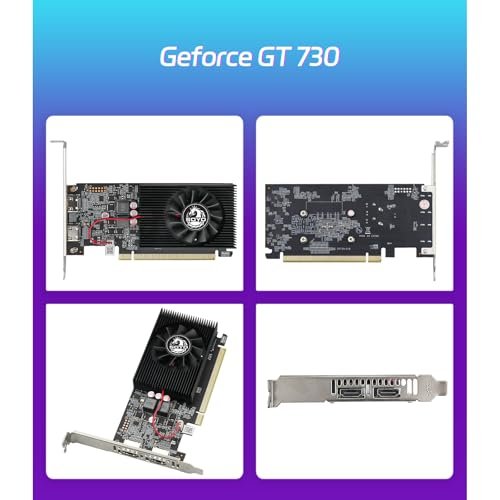
SOYO GT 730 4GB Low Profile Dual HDMI

Product Overview
The SOYO GT 730 4GB is a compact, low-profile card that suits office rigs and HTPCs. It pairs dual HDMI outputs with a small slot design so you can run two monitors without a bulky GPU. The card stays cool and runs quietly for day-long productivity.
This model is a budget choice when the best gpu for dual monitors means stable desktop work, video playback, and light photo editing. It supports older PCIe slots and fits small cases. Drivers are basic but reliable. It’s an easy upgrade to get dual-screen output on older systems without extra adapters or power connectors.
Advantages
- Low-profile design fits small form factor PCs
- Dual HDMI outputs for two monitors out of the box
- Quiet cooling and low power draw
- 4GB memory suitable for office tasks and video
- Easy plug-and-play setup for older PCIe slots
Limitations
- Not suited for modern AAA gaming
- DDR3 memory is slower than GDDR options
- Limited driver features for advanced workflows
Our Verdict
I recommend the SOYO GT 730 for budget builders and small-form-factor users who need a simple dual monitor upgrade. If your priority is the best gpu for dual monitors for office work and media playback, this card offers solid value. It’s cheap, compact, and reliable for everyday dual-screen setups.
Best For
| Best for | Why |
|---|---|
| Budget dual display | Low cost with dual HDMI outputs |
| Small cases | Low-profile fits tight spaces |
| Office work | Quiet, low power, stable drivers |
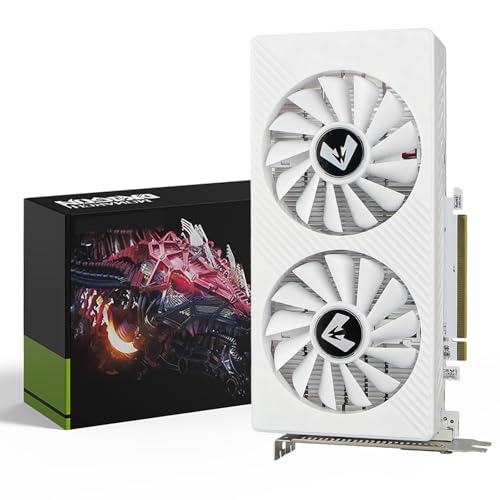
MOUGOL RX 580 8GB GDDR5 Dual-Use Card
Product Overview
The MOUGOL AMD Radeon RX 580 8GB is a strong mid-range card that handles gaming, streaming, and multitasking across two monitors. Its 8GB GDDR5 and 256-bit bus deliver smooth 1080p gaming and fast viewport redraws for creative apps. This card uses dual fans to keep temperatures steady under load.
For anyone seeking the best gpu for dual monitors for mixed use, the RX 580 gives headroom for games on one screen and apps on the other. It supports modern drivers and common outputs for dual-monitor setups. Power needs are higher than basic cards, but performance and versatility improve productivity and play.
Advantages
- 8GB GDDR5 memory for solid 1080p performance
- Good for gaming plus dual-monitor multitasking
- Dual-fan cooling keeps temps reasonable
- 256-bit memory bus for stable throughput
- Strong value for price-to-performance ratio
Limitations
- Higher power draw than entry-level GPUs
- Larger card size may not fit tiny cases
- Not the quietest under heavy load
Our Verdict
I suggest the MOUGOL RX 580 to users who want the best gpu for dual monitors that also supports light to moderate gaming and content work. If you need performance on one screen and productivity on the other, this card is a balanced, cost-effective choice. It offers strong value for mixed use.
Best For
| Best for | Why |
|---|---|
| Gaming + productivity | Enough memory and power for 1080p games |
| Content creators | Fast viewport and render responsiveness |
| Multitaskers | Handles apps on two screens smoothly |
WAVLINK 4-Monitor DisplayLink Adapter DL7400

Product Overview
The WAVLINK DisplayLink DL7400 adapter is a non-gaming PCIe card that adds two DisplayPort and two HDMI outputs. It uses DisplayLink technology to extend up to four monitors on Windows or Linux. This solution is driver-based and ideal for dense office setups where the best gpu for dual monitors means many screens rather than 3D power.
It supports 4K and 8K output scaling depending on displays and bandwidth. The card is great for traders, designers, and multi-window professionals. Note that GPU acceleration for heavy 3D apps is limited by DisplayLink’s driver-based pipeline.
Advantages
- Supports up to four monitors from one card
- Mix of 2 DP and 2 HDMI outputs
- Works with Windows 11/10 and Ubuntu
- Good for multi-monitor office and productivity setups
- Saves PCIe slot space versus multiple GPUs
Limitations
- Not meant for high-end gaming or 3D rendering
- Relies on DisplayLink drivers and CPU
- Latency and compression may affect video editing
Our Verdict
I recommend the WAVLINK DL7400 for professionals who need many screens rather than gaming power. If your goal is the best gpu for dual monitors in a multi-monitor cluster or workstation, this card offers the most flexible outputs. It’s ideal for trading desks and office environments requiring multiple displays.
Best For
| Best for | Why |
|---|---|
| Multi-monitor workstations | Four outputs from a single card |
| Office fleets | Driver support for Windows and Ubuntu |
| Non-gaming setups | Optimized for desktop and video playback |
SRhonyra GTX 1060 6GB Low Profile SFF GPU

Product Overview
The SRhonyra GTX 1060 6GB is a compact version of a proven mid-range GPU, suitable for small desktops that need gaming power alongside dual-monitor support. With 6GB GDDR5 and a 192-bit bus, it runs modern titles at 1080p and keeps two displays active without strain. It’s energy efficient for its class and fits many SFF builds.
For users looking for the best gpu for dual monitors where gaming and work coexist, this GTX 1060 balances speed and size. Drivers are mature and stable. Expect solid frame rates on one screen while streaming or browsing on the other.
Advantages
- 6GB GDDR5 good for 1080p gaming and multitasking
- Low-profile design fits compact PCs
- Proven NVIDIA driver support
- Efficient cooling for steady performance
- Handles one gaming screen and one productivity screen
Limitations
- Older architecture compared to current mid-range cards
- Limited to 192-bit bus for memory bandwidth
- May lack newer features like ray tracing
Our Verdict
I’d choose the SRhonyra GTX 1060 if you need the best gpu for dual monitors and plan to game on one screen while working on the other. It’s ideal for small-form-factor gamers and creators who want reliable NVIDIA drivers and compact size. The card delivers good value for mixed use.
Best For
| Best for | Why |
|---|---|
| SFF gaming rigs | Low-profile fit with good 1080p power |
| Streamer setups | Can game and run chat/apps on second screen |
| Stable drivers | Mature NVIDIA support |
Xynsviu GT740 2GB 4x HDMI Multi-Display Card

Product Overview
The Xynsviu GeForce GT740 2GB offers four HDMI ports to drive multiple monitors from one low-profile card. It’s aimed at users who need many HDMI outputs and stable desktop performance rather than top gaming speeds. The card is simple to install and works well where the best gpu for dual monitors expands into triple or quad display setups.
Expect smooth video playback, light photo editing, and stable multi-window desks. Performance is modest, and the 2GB memory limits heavy workloads. Still, for dedicated multi-HDMI needs, this card remains a practical choice for offices and kiosks.
Advantages
- Four HDMI outputs for multi-monitor setups
- Low-profile design fits compact cases
- Simple installation and setup
- Good for video walls, kiosks, and offices
- Quiet operation for desktop use
Limitations
- Only 2GB memory limits heavy tasks
- Not suitable for modern gaming
- Older GPU architecture with limited driver features
Our Verdict
I recommend the Xynsviu GT740 for users who need multiple HDMI screens and stable desktop output. If your priority is the best gpu for dual monitors and beyond—like 3–4 HDMI displays—this card gives easy multi-screen support. It’s best for offices, kiosks, and low‑power multi‑display stations.
Best For
| Best for | Why |
|---|---|
| Multi-HDMI setups | Four native HDMI ports |
| Office displays | Quiet and stable output for work |
| Information kiosks | Simple, reliable multi-screen support |
I recommend choosing a card that matches your daily use: simple low-profile cards for office dual-screen needs, mid-range GPUs for gaming plus a second monitor, and DisplayLink solutions for many displays. The best gpu for dual monitors depends on ports, power, and whether you need gaming or pure desktop work.
I prefer balancing cost and capability. For most people, the best gpu for dual monitors is one that delivers stable 60Hz output, fits the case, and has solid driver support—this saves time and keeps your workflow smooth.
FAQs of best gpu for dual monitors
Do I need a special GPU for two monitors?
Most modern GPUs and many adapters support two monitors; choose based on ports, power, and driver support for the best gpu for dual monitors.
Can integrated graphics drive dual monitors?
Yes, many CPUs with integrated graphics can run two displays; check motherboard outputs and the best gpu for dual monitors needs if you want higher performance.
Which ports are best for dual-monitor setups?
HDMI and DisplayPort are common. For high refresh or 4K use DisplayPort; HDMI is fine for most dual‑monitor setups and the best gpu for dual monitors often offers both.
Will DisplayLink adapters perform well?
DisplayLink adapters work well for office apps and many monitors, but they use CPU and drivers, so they aren’t the best gpu for dual monitors where heavy 3D or video editing is required.
How many GPUs should I consider?
One GPU with the right outputs is usually enough. Pick a single card that matches your display count, resolution, and the best gpu for dual monitors performance needs.
