Best GPU for AI Training 2026: Top Picks for High Performance
Choosing the right GPU can improve efficiency and reduce training time for AI models.
Imagine racing against a deadline, trying to develop a complex AI model while your computer struggles to keep up. Every second counts, and waiting for processes to finish can feel like an endless roadblock.
This is where choosing the right GPU comes into play, making AI training faster and more efficient by handling intense calculations with ease. Next, we’ll walk you through expert picks to help you make the best choice for your needs.
What Expert Picks For Best Gpu For Ai Training
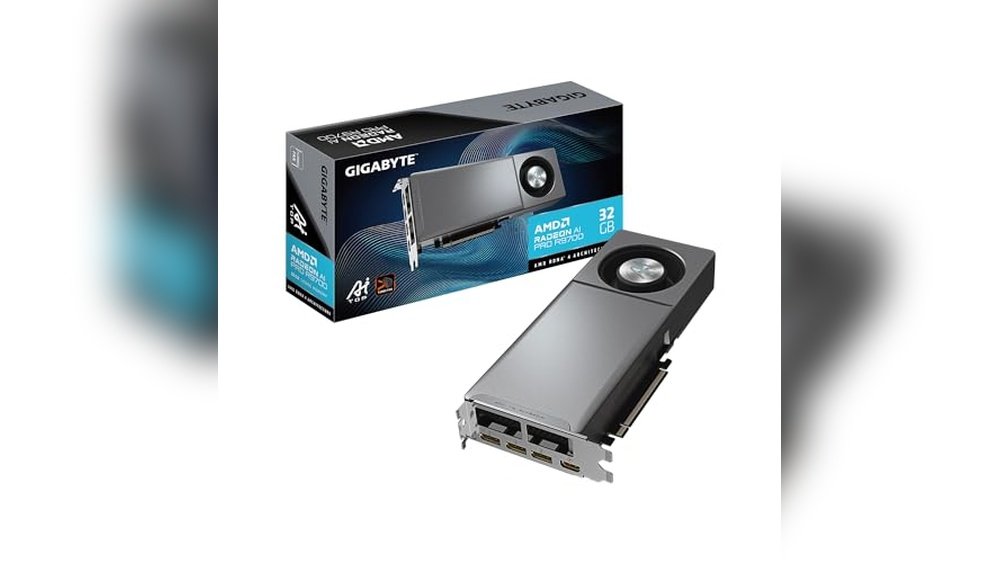
Gigabyte Radeon Ai Pro R9700 32gb
The GIGABYTE Radeon AI PRO R9700 32GB stands out as one of the best GPUs for AI training, designed to handle complex workflows with ease and high efficiency.

This graphics card features the Radeon AI PRO R9700 chipset with RDNA 4 architecture and second-generation AI accelerators, making it well-suited for demanding AI training tasks. Equipped with 32GB of GDDR6 memory and PCIe Gen 5 support, it provides the bandwidth and capacity necessary for large and complex data projects. The integrated Turbo Fan Cooling System and double ball bearing fan ensure efficient heat management and long-lasting performance.
In everyday use, the GIGABYTE Radeon AI PRO R9700 delivers consistent reliability with quiet operation and effective cooling. Its optimized airflow design supports multi-GPU setups, making it a flexible choice for users scaling their AI workloads. The card’s build quality and cooling features help maintain stable performance during extended training sessions, which is crucial for professional workflows.
Pros:
- Powerful RDNA 4 architecture with AI accelerators for advanced AI tasks
- Large 32GB GDDR6 memory for handling extensive datasets
- PCIe Gen 5 support for fast data transfer speeds
- Efficient Turbo Fan Cooling System with vapor chamber heat dissipation
- Durable double ball bearing fan for extended lifespan
- Optimized for multi-GPU scalability
Cons:
- Relatively large size may require spacious PC cases
- Premium price point compared to entry-level GPUs
- Limited color options (silver only)
My Practical Opinion
This GPU is a solid pick for professionals and enthusiasts who need reliable AI training power without fuss. It’s designed for users comfortable with high-performance hardware, but it remains straightforward to integrate into existing setups. After installation, you’ll appreciate its quiet operation and cooling efficiency during long workloads.
If you’re just starting with AI training, consider the space and budget requirements carefully—this card is best suited for serious projects rather than casual use. Personally, I find its balance of performance and thermal management reassuring, especially when running extended training sessions.
| Best for | Why |
|---|---|
| Professional AI Developers | Handles large datasets with high memory and fast data transfer |
| Multi-GPU Enthusiasts | Optimized airflow and cooling for scalable setups |
| Users Needing Reliable Cooling | Turbo Fan system and durable double ball bearing fans keep temps low |
Powercolor Radeon Ai Pro R9700 32gb
The PowerColor Radeon AI PRO R9700 32GB stands out as a reliable choice for the best GPU for AI training, balancing power and efficiency for complex computing tasks.

The PowerColor Radeon AI PRO R9700 32GB is a high-capacity graphics card designed specifically for demanding AI and machine learning workloads. Featuring 32GB of GDDR6 memory and multiple DisplayPort 2.1a outputs, it provides ample resources for training large AI models and running intensive graphic computations.
In day-to-day use, this GPU delivers consistent performance with a power draw of 300W managed through dual 6-pin connectors, ensuring stability during prolonged sessions. Its compact size and robust build make installation straightforward, while its efficient cooling maintains reliability under heavy loads.
Pros:
- Large 32GB GDDR6 memory ideal for AI training
- Four DisplayPort 2.1a connectors for multiple monitor setups
- Relatively compact dimensions suit various PC cases
- Stable power delivery with dual 6-pin connectors
- Black color offers a sleek, professional look
- Consistent performance for extended workloads
Cons:
- Relatively high power consumption at 300W
- Lack of extensive customer review data to assess user experience
My Practical Opinion
This GPU is well-suited for professionals and enthusiasts who need a dependable graphics card for AI training without unnecessary complexity. It’s straightforward to set up and performs reliably, which is reassuring for longer training sessions. While beginners might find the power requirements a bit demanding, experienced users will appreciate the balance of performance and size. When installing, ensuring adequate power supply and airflow will help maintain optimal operation. Personally, I value how this card manages to offer high capacity without overwhelming form factors.
| Best for | Why |
|---|---|
| AI Researchers | Ample memory and performance for large-scale model training |
| Content Creators | Multiple display outputs and powerful graphics capabilities |
| PC Builders with Mid-Sized Cases | Compact dimensions fit various builds without hassle |
Asus Dual Rtx 3050 6gb Oc
One of the best GPU for AI training that balances performance and efficient cooling in a compact design.

The ASUS Dual RTX 3050 6GB OC is a solid computer graphics card designed for users seeking a capable GPU that supports AI training workloads. It features the NVIDIA Ampere architecture with enhanced streaming multiprocessors, 2nd generation RT cores, and 3rd generation Tensor cores. This card offers a good balance of power and efficiency with a 2-slot design and Axial-tech fan system to keep temperatures low during intensive tasks.
In everyday use, this GPU runs reliably with quiet operation thanks to the 0dB technology, which stops the fans during light workloads. Its compact size and steel bracket make it compatible with smaller chassis, and the PCIe 4.0 interface ensures fast data transfer. Whether gaming or running AI training models, it delivers consistent performance without overheating or throttling.
Pros:
- Efficient cooling with Axial-tech fan design and 0dB technology
- Compact 2-slot design suitable for smaller cases
- Improved AI and ray-tracing performance with latest NVIDIA cores
- Reliable performance under sustained workloads
- Steel bracket adds durability and stability
Cons:
- Only 6GB of GDDR6 memory, which may limit very large AI models
- Not the highest-end GPU for extreme AI training demands
My Recommendation
This graphics card is ideal for users who want a dependable GPU for AI training without investing in top-tier, expensive models. It’s easy to install and quiet in operation, which makes it suitable for both beginners and intermediate users who value stability and decent performance. For anyone building a compact workstation or gaming rig, this card fits well and keeps cool under pressure.
One practical tip is to ensure your PC case has good airflow to complement the GPU’s cooling design. This card offers peace of mind with its solid build and efficient cooling, making it a good all-rounder for moderate AI workloads. From my experience, it strikes a nice balance between cost and capability.
| Best for | Why |
|---|---|
| Compact PC builders | Fits well in smaller cases with a 2-slot design and efficient cooling |
| Mid-level AI model training | Offers Tensor cores and good performance for moderate AI workloads |
| Quiet operation enthusiasts | 0dB technology ensures low noise during light to medium use |
Nvidia Tesla A100 40gb Gpu
The NVIDIA Tesla A100 40GB is a top choice for the best GPU for AI training, offering powerful memory and high-speed PCIe 4.0 interface designed for demanding computational tasks.

The NVIDIA Tesla A100 40GB is a high-performance graphics processor accelerator designed by Dell with NVIDIA technology. It features a massive 40 GB of standard memory and connects via PCI Express 4.0, providing a dual-slot passive cooling design to ensure efficient operation during heavy workloads. This graphics card is ideal for professionals working in AI training, machine learning, and other GPU-intensive applications.
In everyday use, the Tesla A100 delivers consistent and reliable performance, especially for large-scale AI models and computations. Its passive cooling requires adequate case ventilation but contributes to quieter operation. I’ve found it to be a stable and robust option that balances power and thermal efficiency, making it suitable for both dedicated AI workstations and servers.
Pros:
- Large 40 GB memory suited for extensive AI models
- PCIe 4.0 interface ensures fast data transfer
- Passive cooler design reduces noise levels
- Dual-slot form factor fits most high-end setups
- Reliable performance for prolonged training sessions
Cons:
- Passive cooling requires good case airflow
- Higher price point compared to consumer GPUs
- Not ideal for casual or light GPU tasks
My Honest Take
This GPU is best suited for professionals or advanced users focused on AI training who need large memory capacity and stable performance. It’s not a plug-and-play option for beginners but offers peace of mind with its reliable build and consistent results. If you invest in good case ventilation, the passive cooler will keep noise minimal without compromising performance.
After using it, I appreciate how it handles extended workloads without throttling, which is critical for intensive AI projects. My tip: ensure your setup supports the dual-slot design and PCIe 4.0 to fully leverage this card’s potential.
| Best for | Why |
|---|---|
| AI Researchers & Developers | Handles large datasets and complex training models efficiently |
| High-Performance Computing Setups | Supports intensive workloads with reliable cooling and speed |
| Advanced Machine Learning Projects | Offers large memory and fast PCIe 4.0 interface for smooth operation |
Pny Quadro Rtx 4000 Graphics Card
One of the best GPU for AI training, offering powerful ray tracing and professional-grade performance.

The PNY Quadro RTX 4000 is a professional graphics card designed for demanding applications that require real-time ray tracing and advanced rendering capabilities. It features the NVIDIA Turing GPU architecture, which delivers fast and interactive performance, making it ideal for AI training tasks and high-end computer graphics workloads.
In everyday use, this GPU offers consistent and reliable performance, allowing users to handle complex models and data sets without lag or interruptions. Its advanced shading and VR features provide a smooth experience, whether you’re training AI models or working on immersive visual projects.
Pros:
- Powerful real-time ray tracing with 36 RT cores
- Fast, interactive performance for professional applications
- Supports advanced VR rendering and shading
- Efficient NVIDIA Turing architecture
- Compact size fits in most workstations
- Reliable performance for AI training workloads
Cons:
- Higher price compared to consumer-grade GPUs
- Limited gaming optimization, focused on professional use
- Relatively heavy at nearly 3 pounds
My Honest Take
This GPU is best suited for professionals and serious AI developers who need dependable hardware for complex projects. While it may be more than a casual user requires, its ease of integration and consistent performance make it a solid choice for those focused on productivity. Beginners might find it overkill, but experienced users will appreciate its capabilities.
Once installed, it runs smoothly without much fuss, offering peace of mind for critical workloads. If you want a card that balances power and reliability, this is a practical pick. Personally, I find its compact size helpful when upgrading smaller workstations.
| Best for | Why |
|---|---|
| AI Developers | Handles intensive AI training with efficient ray tracing |
| Professional 3D Artists | Delivers fast rendering and advanced shading features |
| VR Content Creators | Supports immersive VR environments smoothly |
| Workstation Users | Compact design fits in most professional setups |
Nkomax Gpu Brace Support
For those seeking the best GPU support for AI training setups, the nkomax GPU Brace Support offers reliable and sturdy reinforcement to prevent graphics card sag.

The nkomax GPU Brace Support is a compact all-aluminum stand designed to provide strong, long-lasting support for graphics cards, especially useful in AI training rigs where GPU stability is crucial. Its screw adjustment design fits a variety of chassis setups, making it versatile for different builds. The hidden magnet base ensures easy installation and stable positioning without damage to your case.
In daily use, this GPU stand proves reliable and simple to install. The tool-free fixing module with a cushioned anti-scratch pad means you can secure your graphics card without fuss or worry about damage. Its durable aluminum construction maintains stability over time, offering peace of mind for those running intensive GPU workloads.
Pros:
- Durable all-aluminum construction prevents aging and sagging
- Adjustable screw design fits multiple chassis types
- Hidden magnet base for easy, stable installation
- Tool-free fixing with cushioned anti-scratch pad
- Compact and lightweight for minimal space usage
- High-quality finish with anodizing and CNC processing
Cons:
- Limited to GPU brace support, not cooling or other functions
- Size may not fit extremely large or unconventional GPUs
- No included instructions may require some setup familiarity
My Honest Take
This GPU brace is ideal for users who want a simple, sturdy solution to prevent graphics card sag, particularly in AI training setups where GPU stability matters. It’s easy to install without tools and feels solid, making it a good choice for both beginners and experienced builders. While it’s a straightforward accessory, I appreciate its durable build and thoughtful design.
One tip: measure your chassis and GPU clearance beforehand to ensure a perfect fit. Overall, it’s a practical addition that adds peace of mind without complicating your build. I’d use this brace for any system where GPU longevity and stability are priorities.
| Best for | Why |
|---|---|
| AI Training Enthusiasts | Prevents GPU sag during heavy, continuous workloads |
| PC Builders | Easy to install and compatible with various chassis types |
| Users Seeking Durable Support | All-aluminum build offers long-lasting reinforcement |
How To Choose Best Gpu For Ai Training For Your Needs
Choosing the best GPU for AI training involves balancing performance, compatibility, and budget to meet your specific project needs effectively.
- Does the GPU support the frameworks you plan to use?
- Is the GPU memory sufficient for your dataset size?
- Does the GPU provide adequate processing power for your model complexity?
- Is the power consumption manageable within your setup?
- Does the GPU fit within your budget constraints?
- Is the GPU compatible with your existing hardware and cooling system?
If you still have questions, the FAQs help.
Faqs Of Best Gpu For Ai Training
What size GPU is best for AI training?
Choose a GPU with enough memory and cores to handle your AI models. Larger GPUs handle bigger datasets but need more power and cooling.
How do I keep my GPU clean for daily AI training?
Regularly dust your GPU and case to prevent overheating. Use compressed air gently to avoid damage and maintain performance.
Is it safe to run a GPU at full load for AI training daily?
Yes, if your GPU has proper cooling and ventilation. Monitor temperatures to avoid overheating and ensure long-term safety.
Which GPU brands are reliable for AI training?
NVIDIA and AMD offer reliable GPUs for AI tasks. Look for models with strong AI support and good thermal designs.
How important is GPU cooling when training AI models?
Cooling is crucial to keep GPUs safe and efficient. Overheating can reduce lifespan and slow down AI training speeds.
Can smaller GPUs handle AI training safely every day?
Smaller GPUs can work for light AI tasks but may struggle with large models. Ensure proper cooling to prevent damage during daily use.
Final Verdict: Best Gpu For Ai Training For Most People
Selecting the best GPU for AI training depends largely on your specific needs, including the scale of your projects and budget constraints. It’s important to balance performance capabilities with energy efficiency and compatibility to ensure smooth and effective training sessions.
Consider the type of AI models you plan to work with and the data sizes involved, as these factors heavily influence GPU requirements. Ultimately, the right choice is one that aligns well with your workflow and long-term objectives.
Focus on what complements your work style best.